


1. Introduction: Changes in Primary Research
Investment professionals often seek unique information to stay ahead. They use primary research to get insights from industry experts, which is key for thorough checks and valid ideas. For many years, traditional expert networks like GLG, AlphaSights, and Guidepoint have connected investors with these experts for one-on-one talks.
The expert network industry has become quite large, with expected global revenue reaching $2.5 billion in 2024 and possibly over $11 billion by 2032. This growth, averaging 16-18% each year for the past decade, shows the strong need for specialised knowledge in a complicated global economy. Companies like GLG, which has over one million experts, hold a big share of a market that is essential for private equity, consulting, and asset management firms.
Yet, despite this growth, the traditional model is facing serious problems. The system that once made information easy to access is now causing inefficiencies, high costs, and rising compliance risks for clients. Investment professionals often find themselves stuck in a model that sells access but requires them to do all the work to generate useful intelligence. Clients waste time vetting, scheduling, interviewing, and transcribing, while paying high fees—often over $1,200 per call—for just an introduction. The networks take 50-70% of the engagement fee, which doesn't match what clients really want: reliable information quickly and efficiently.
This report looks at the problems in the traditional expert network model and explores a new alternative: the "Done-For-You" (DFY) expert research model, created by platforms like Woozle. We will highlight key issues for investment professionals, including costs, time waste, reliance on the same experts, and compliance risks. By comparing this with the DFY approach, we will show how a platform that manages the entire research process—from finding experts to delivering final information—provides better value. This move from a simple access model to a complete intelligence service is the next step in primary research, aiming to improve efficiency, lower costs, and enhance compliance for today's investment firms.
2. The Traditional Expert Network Model: A System in Trouble
The traditional expert network model started when there wasn't much information available. It was a new way to connect people who invest money with experts in specific fields. But now, as the market has grown and technology has changed, this model has become less useful for its clients. The main service—introducing people—has become common and cheap, but the costs and ways of working are stuck in the past. This creates a gap between what clients pay and what they actually get.
2.1. The Economics of Access: An Expensive Cost
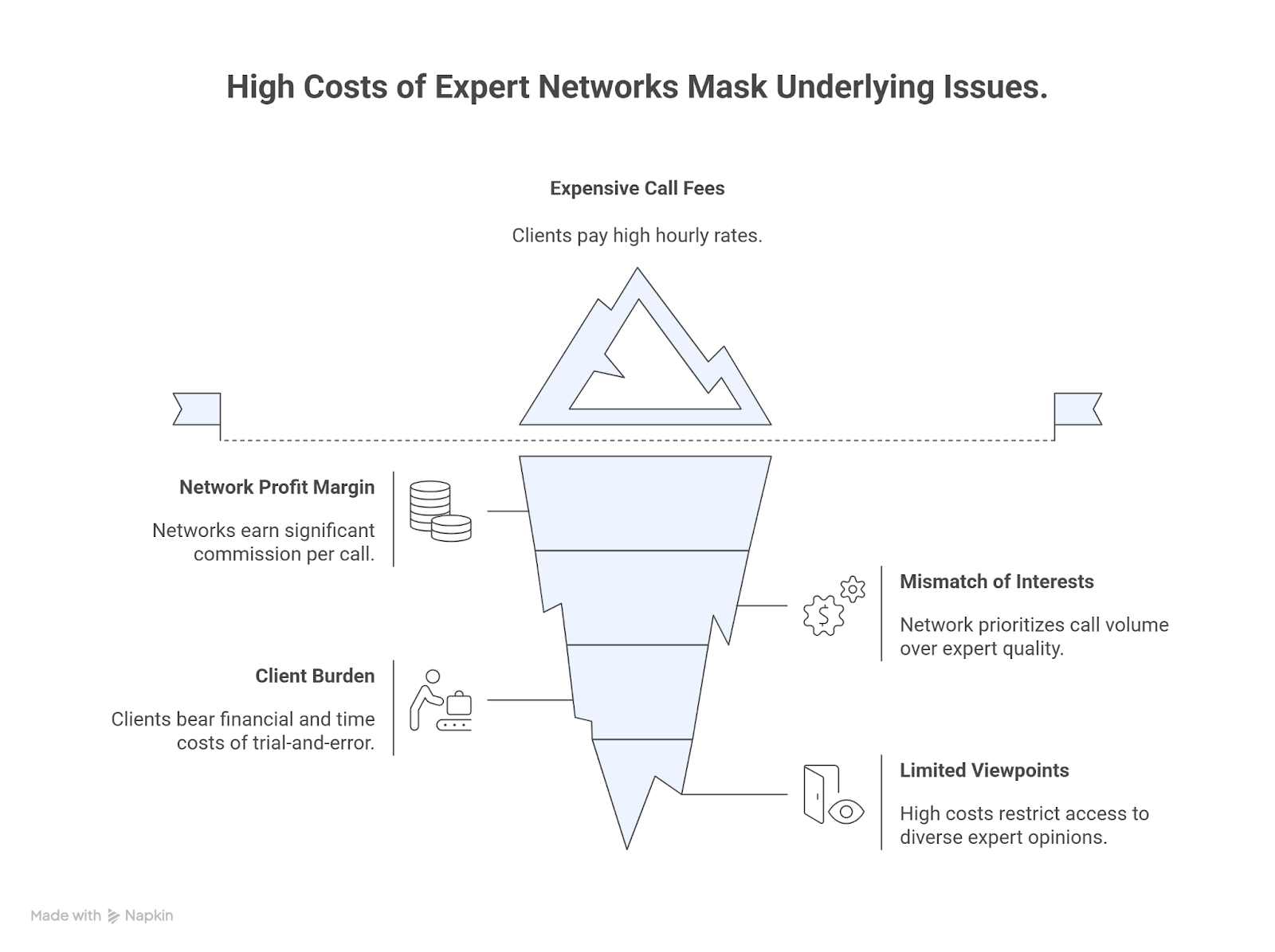
One big issue with the old expert network model is its high costs. Top networks charge clients around $1,200 to $1,350 for a one-hour call with an expert. This fee isn't for research; it's just for the connection. The networks mainly help set up calls using large databases of experts, many of whom have been used before. They make a lot of money—usually 50% to 70%—from this service.
This "expert network tax" creates a mismatch of interests. The network wants to make as many connections as possible because each call makes them money. This can result in clients speaking with less suitable experts, only to be told they need to book another expensive call. The network profits from the client's trial-and-error, while the client pays for failed interviews. This approach focuses more on the number of introductions than on the quality of advice, putting all the financial and time burden on the client. High costs per call make it hard for teams to do thorough checks, which could limit their access to diverse viewpoints.
2.2. The Hidden Cost: Client Work and Inefficiency
Besides the money spent, the traditional model adds a heavy workload on the investment professional. Even with high fees, clients do most of the work needed to turn an expert introduction into useful information. Experts say investment professionals might spend up to 95% of their time doing admin tasks instead of strategic analysis.
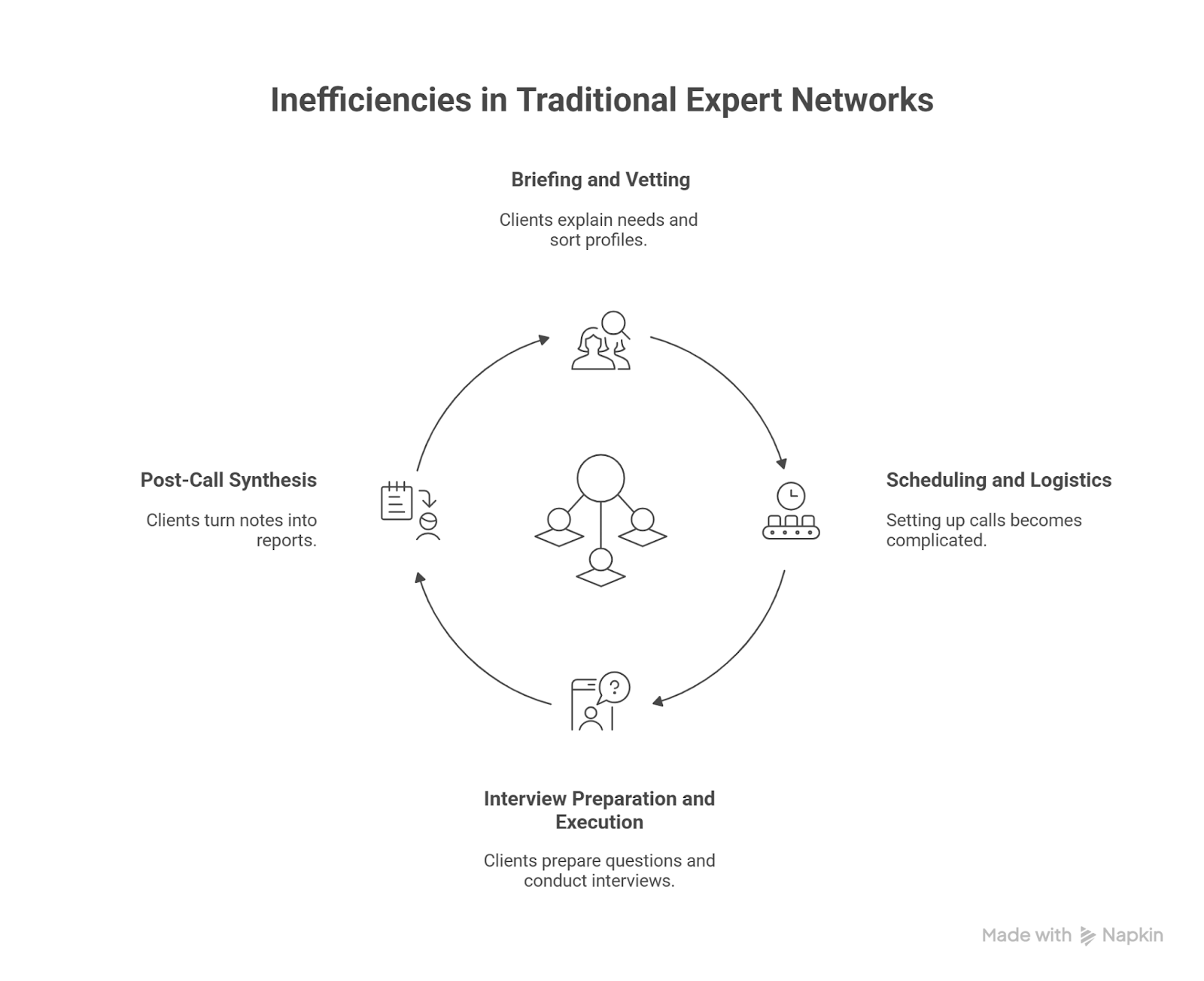
This workload has several time-consuming steps:
- Briefing and Vetting: Clients explain what they need and sort through expert profiles, trying to find the right fit from vague descriptions.
- Scheduling and Logistics: Setting up a call becomes complicated due to time zones and busy schedules of everyone involved, causing delays.
- Interview Preparation and Execution: Clients prepare questions, conduct the interview, and take notes at the same time.
- Post-Call Synthesis: After the call, clients must turn their notes or recordings into a clear format for reports. This important step is all on them.
Each of these steps wastes valuable time. Every hour spent on admin tasks is an hour not used for more important activities like financial planning or managing investments. This inefficiency slows down decision-making.
2.3. The Problem of Recycled Databases and Similar Ideas
The advantage of original research is finding unique insights not widely known. But large expert networks often hurt this goal. To grow, they rely on old databases of experts. These same experts are contacted many times by different firms, often competing for the same information.
This reliance on a small group of "usual suspects" leads to similar thinking. When many firms get insights from the same experts, the information loses its unique value, making it harder to gain an edge. The chance of getting a fresh perspective fades when competitors hear the same stories. Additionally, experts who are frequently called may give generic answers instead of the specific insights that investors really need. What was designed to offer an information advantage can end up creating a cycle of repeated opinions.
3. Compliance and Risk: The Hidden Problem
Operational and financial issues are important, but the biggest problem with the traditional expert network model is the compliance risk it places on the client. In a world where rules are strict, especially about sharing Material Non-Public Information (MNPI), this model puts investment professionals at great risk. Clients must handle complex compliance rules, avoid accidentally sharing sensitive information, and ensure their calls are proper.
3.1. Risk of "Wall-Crossing"
The basic idea of a traditional expert consultation involves a direct chat between an investor and an industry insider. This setup risks "wall-crossing," where the investor might accidentally learn MNPI. Even with training and rules in place, the real-time nature of conversations makes it hard to control what information is shared. An expert might slip and reveal confidential details, or an investor might ask about something sensitive.
Once MNPI is shared, the receiving firm faces problems. It might have to stop trading in that security, which could harm its investment plans and lead to big financial losses. The investment firm must prove that its choices weren’t influenced by bad information. This direct exposure creates serious ongoing issues. Regulatory bodies like the Securities and Exchange Commission (SEC) are paying more attention, with penalties reminding everyone of the risks involved. While reputable networks have strong compliance systems, they can’t eliminate the risk of putting clients in direct talks with experts who may not understand all the rules.
3.2. The Cost of Internal Oversight
To reduce these risks, investment firms must set up expensive internal compliance processes. This includes checking experts before calls, having a compliance officer on calls, and keeping detailed records afterward. While these steps are necessary, they add more administrative work and costs to the research process.
Chaperoning takes up valuable staff time, and reviewing call transcripts for compliance issues is slow and hard work. Firms need to keep thorough records of every expert interaction to meet rules and internal standards. This compliance system, while needed for protection, is another hidden cost of the traditional model. The expert network makes the introduction, but the client bears all the compliance responsibilities, from prevention to documentation. This shift of risk doesn’t match the high fees charged for the service, showing a clear mismatch in value. The quality of the research process relies on the client's ability to manage these challenges, which distracts from the main goal of gaining investment insights.
4. The "Done-For-You" Model: A New Way to Do Research
Because of problems with old expert network models, a new way has come about: the "Done-For-You" (DFY) primary research platform. Companies like Woozle are leading this change. This model makes research easier by shifting the work and rules from the client to the platform. Instead of just selling access, the DFY model provides finished, checked information. This change moves from a simple service to a complete solution, tackling major issues like cost, time, and risk for investment professionals.
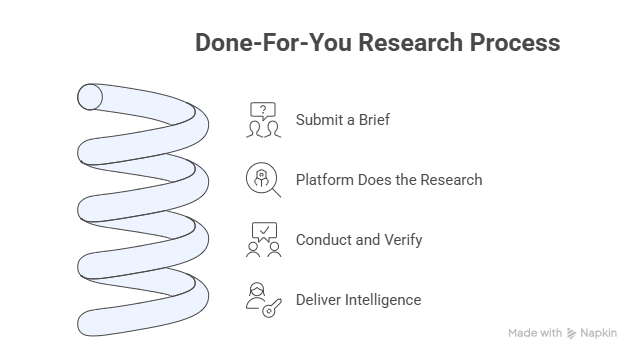
The process is straightforward and focuses on the client:
- Submit a Brief: The client spends about ten minutes sharing their main research questions and goals. This is all the work they have to do.
- Platform Does the Research: The DFY platform takes care of everything next. It finds new, relevant experts—not using old lists—to get fresh insights.
- Conduct and Verify: The platform's trained researchers hold structured interviews with the experts. They look for deep insights, check facts, and ensure everything is accurate and compliant.
- Deliver Intelligence: The client receives the key findings directly on their dashboard. The information is easy to search and ready to use in their investment reports and analysis.
This complete approach changes the client's role from an active researcher to a smart user of finished information, leading to big gains in efficiency, cost savings, and compliance.
4.1. Big Time and Cost Savings
The biggest benefit of the DFY model is the huge drop in both costs and the client's time. By managing all parts of the research process, the platform cuts out 95% of the admin and logistical tasks that usually fall on the investment team. The ten-minute briefing replaces hours or even days of finding, scheduling, preparing for, and recording expert calls. This frees up time for investment professionals to concentrate on what they do best: analysis and decision-making.
This efficiency leads to real cost savings. DFY platforms like Woozle can deliver completed research for about half the price of a single traditional expert call. This happens because the platform handles everything internally. Researchers conduct the interviews, meaning there’s no complicated scheduling with the client, which often causes delays and costs. Experts can be contacted faster, and the whole project takes less time. As a result, research that might take weeks to arrange through a traditional network can be ready in just a few days. This speed gives a big advantage in fast-moving markets.
4.2. Better Compliance and Risk Reduction
The DFY model provides a strong solution to the problems of following rules in older systems. By acting as a middleman in all expert talks, the platform keeps the client safe from direct risks related to sensitive information. Since the client isn’t on the call, there’s no chance of accidentally crossing boundaries.
This separation is backed by strict internal rules. The DFY platform takes care of:
- Expert Checks: Carefully checking backgrounds and ensuring experts are allowed to talk about certain topics without breaking confidentiality.
- Guided Interviews: Using specific steps to steer conversations away from sensitive topics.
- Fact-Checking: Reviewing and removing any risky information before sharing it with the client.
The client gets a pre-approved, "clean" intelligence product, adding a strong layer of compliance protection. This proactive method turns compliance from a burden into a feature of the platform. The process is clearer, the chance of human error in a live call is eliminated, and the investment firm is protected from regulatory issues typical of the old model. Moving from reactive risk management to proactive risk elimination is a key part of the DFY value.
4.3. Higher Quality Insights Through New Sources
Unlike traditional networks that depend on a limited database, the DFY model's value comes from the quality and uniqueness of the intelligence it provides. This encourages a focus on "fresh sourcing"—bringing in new experts for each project. This way, the insights are up-to-date, relevant, and not just recycled opinions given to competitors.
By finding and talking to experts actively working in an industry but not part of the usual "expert circuit," the DFY model reveals unique viewpoints. The structured interview process, led by trained researchers, boosts insight quality. These researchers are good at asking detailed questions, challenging assumptions, and putting together different pieces of information into a clear story. The final product isn’t just a raw transcript but a well-organised analysis, where key points are verified and explained. This focus on delivering high-quality, unique intelligence counters the trend of similar thinking and gives investment professionals the real edge they want from primary research.
5. Conclusion: The Future of Primary Research Is Finished Intelligence
The expert network industry, a key part of institutional investing for over twenty years, is at an important turning point. The old model, based on selling access and outsourcing work, no longer meets the needs of modern investment professionals who want more efficiency, cost-effectiveness, and compliance assurance. High fees, heavy administrative tasks, reliance on recycled expert pools, and passing compliance risks to the client are major flaws in the legacy system that need change.
The rise of the "Done-For-You" (DFY) expert research model, shown by platforms like Woozle, marks a big shift from just providing access to delivering finished intelligence. By redesigning the entire research process, the DFY model offers a strong and better value. It provides twice the speed at half the cost, frees investment professionals from 95% of the related administrative work, and offers strong protection against compliance risks by keeping the client away from direct expert interactions.
This change tackles the main weaknesses of the old network. The "expert network tax" is gone, replaced by a clear, value-based price for a completed research product. Hidden costs of client time and opportunity are nearly eliminated. The risk of getting stale, similar insights is replaced by a commitment to fresh sourcing and unique, verifiable intelligence. Most importantly, the heavy compliance burden is lifted from the client’s shoulders and managed by the platform.
For investment professionals, hedge funds, private equity firms, and institutional investors, the choice is becoming clearer. Sticking with a model that wastes their most valuable resources—time and focus—while exposing them to unnecessary risk is not a good option in a competitive market. The future of primary research lies in partnering with platforms that provide actionable, compliant, and cost-effective intelligence, not in paying middlemen for introductions. The Done-For-You model is not just a small improvement; it fundamentally redefines how primary research is done, making it the new standard for investors looking for a real competitive edge.


