

The word "expert" gets used loosely - on LinkedIn profiles, cable news panels, podcast intros. But what does it actually mean to be one, and how do you find the right person when the stakes are real? This piece breaks down the definition, the development process, the legal standards, and the practical mechanics of finding and working with experts in 2026.
Quick Answer: What Is an Expert Today?
An expert is a person with demonstrably superior knowledge or skill in a clearly bounded domain, whose competence is recognized by peers, institutions, or measurable outcomes. An expert possesses authoritative knowledge and practical competence in a specific domain - not a vague claim of being "good at things."
In 2026, expertise is validated not only by degrees and years of practice but also by outcomes: publications, peer review, reproducible results, and data-driven performance. An expert has special skill or knowledge in a field, and that field is specific. An orthopedic surgeon. A nuclear engineer. A digital labour researcher. Not "technology enthusiast" or "thought leader."
A useful contrast: a firearms-design expert understands ballistics, materials science, shooter ergonomics, and regulatory compliance. A general mechanical engineer understands mechanics but lacks the depth on internal ballistics or firearms regulation. An expert differs from a specialist in knowledge depth - the expert's matter expertise in a particular field runs deeper and is validated more rigorously. A specialist may focus narrowly; an acknowledged expert has both the depth and the peer recognition to back it up.
Experts are increasingly discoverable through search engines and specialized databases rather than only through referrals. Their digital footprint - publications, court case history, conference keynotes, patent records - is now part of how clients, attorneys, and organizations assess credibility before a single phone call.
Core Definition and Etymology of "Expert"
This section goes deeper than the quick answer - into the history of the word and how it functions in legal, academic, and everyday usage.
The term traces to latin expertus, the past participle of experiri ("to try, test, experience"), built from ex- ("out of") + peritus ("experienced, tested"). The core idea: knowledge gained through testing, not merely claimed. The term "expert" was first recorded in the 14th century, and its legal meaning - a person who may testify in a court of justice - reappeared in English around 1825.
In modern usage, the words "expert" functions as both noun and adjective. As a noun: "an expert in nonproliferation," "an expert witness in pharmacology." As an adjective: "expert analysis of uranium enrichment data," "expert opinion on structural failure." The distinction matters: the noun denotes the person, the adjective qualifies the quality of work or judgment.
Many legal systems and academic publishers - including major houses like cambridge university press - rely on formal criteria to label someone an expert. Quoted opinions in academic texts do not necessarily represent institutional views; they represent the expert's own assessment, grounded in methodology. In some specialized contexts, like military marksmanship or forensic accreditation, "expert" is also a formal rating earned through testing and certification. The term can be both technical and general, depending on the environment it's used in.
How Expertise Develops: From Beginner to Expert
Expertise is a long-term developmental process. It is not a title granted overnight, and it is not a credential you buy.
Becoming an expert requires focused study and consistent practice - what researchers call deliberate practice. This means targeted improvement with feedback, error correction, and stretching beyond current skill limits. The widely cited benchmark is that experts practice for approximately 10,000 hours to develop expertise. Expertise requires approximately 10,000 hours of practice, and experts typically require around 10,000 hours of practice - tens of thousands of hours of accumulated, feedback-rich work.
But the number alone is misleading. A meta-analysis by Brooke Macnamara and colleagues showed that deliberate practice explains about 26% of variance in games, 21% in music, 18% in sports, but only 4% in education and under 1% in professions. Practice matters, but it's not sufficient. Expertise is developed through experience and practice in a specific field, combined with quality of instruction, domain complexity, cognitive ability, and opportunity.
When learning new skills, professionals generally progress through the Dreyfus Model of Skill Acquisition - from novice through advanced beginner, competent, proficient, and finally expert. At the expert level, several cognitive differences emerge:
- Experts categorize problems by deep structures, novices by surface features. A novice sees "a broken pipe." An expert sees "a fatigue-driven failure in a high-cycle vibration environment."
- Experts recall more information from their domain than novices, and skilled memory enables experts to retrieve information rapidly.
- Experts have more elaborate memory representations than novices - their knowledge is organized around principles, not isolated facts.
- Experts possess deeply organized knowledge rather than fragmented facts.
- Experts possess procedural knowledge, novices mostly declarative knowledge. An expert knows how to do something, not just what the textbook says.
Experts target their weakest areas and set specific goals for improvement. They engage in deliberate practice and active knowledge sharing. And expertise is dynamic: experts engage in lifelong learning and stay updated on new research. A cybersecurity expert who stopped learning in 2020 is not an expert in 2026. The same applies to anyone working in AI, digital labour platforms, or regulatory compliance - the environment changes, and the training must keep pace.
Consider three examples. A nuclear power engineer diagnosing destructive vibration becomes expert through hands-on diagnosis, modelling, past failure cases, and peer review. A pharmacist mastering clinical guidelines acquires technical knowledge plus pattern recognition - knowing when guidelines diverge due to patient comorbidities. A digital labour researcher tracking data collection services must continuously update as platforms evolve.
True expertise includes hands-on experience and practical application of knowledge. The development of an expert is not a course you complete. It's a life you build around a particular area of work.

Types of Experts in Modern Society
Experts operate across every sector of modern life. Here's how they break down, with real-world illustrations.
Academic experts. University researchers who have spent decades in a particular field. For example, a researcher at a university studying antisocial traits in veterans since the 1990s, publishing in peer-reviewed journals, securing grants. Institutions like the indian institute of technology or research universities worldwide produce experts whose authority comes from sustained, peer-validated research. Peer recognition is a strong indicator of expertise in this world.
Industry experts. Professionals embedded in specific sectors. An auto industry analyst predicting EV market adoption for 2027 draws on supply chain data, regulatory policy, and component pricing. A company might retain an industry expert to inform its plan for entering a new market segment. These experts influence decision making through specialized knowledge of how their industry actually operates.
Policy and regulatory experts. Specialists advising governments and organizations - nonproliferation experts working on uranium regulation and sanctions frameworks, public health officials guiding pandemic response, or advisors shaping policy on human settlements and urban development. Their participation in public life gives their work broad influence.
Media and science communication experts. People who can explain complex topics to non-specialists. Outlets like the washington post regularly rely on experts to interpret nuclear safety incidents, forced reset triggers, or health crises for a general audience. The ability to communicate clearly without sacrificing accuracy is itself a special skill.
Digital labour and platform experts. Researchers and consultants who monitor the rise of data collection services, algorithmic management, and global gig work. Recently, studies from 2024–2025 have explored how workers on platforms like Upwork define success beyond income - including stability, reputation, and autonomy.
Expert witnesses. In many cases, professionals act as expert witnesses in court, where their expertise is formally tested through qualification, cross-examination, and scrutiny of methodology. Experts are often consulted for their authoritative opinions, and experts can appeal to authority where non-experts cannot - but only if that authority withstands challenge from the other side.
Experts ground their claims in data and evidence rather than personal anecdotes. Across all these categories, what separates a knowledgeable person from a genuine expert is whether their claims survive scrutiny.
Expert Witnesses: When Expertise Enters the Courtroom
This section focuses on the expert witness - a central figure in modern litigation whose role carries distinct legal requirements.
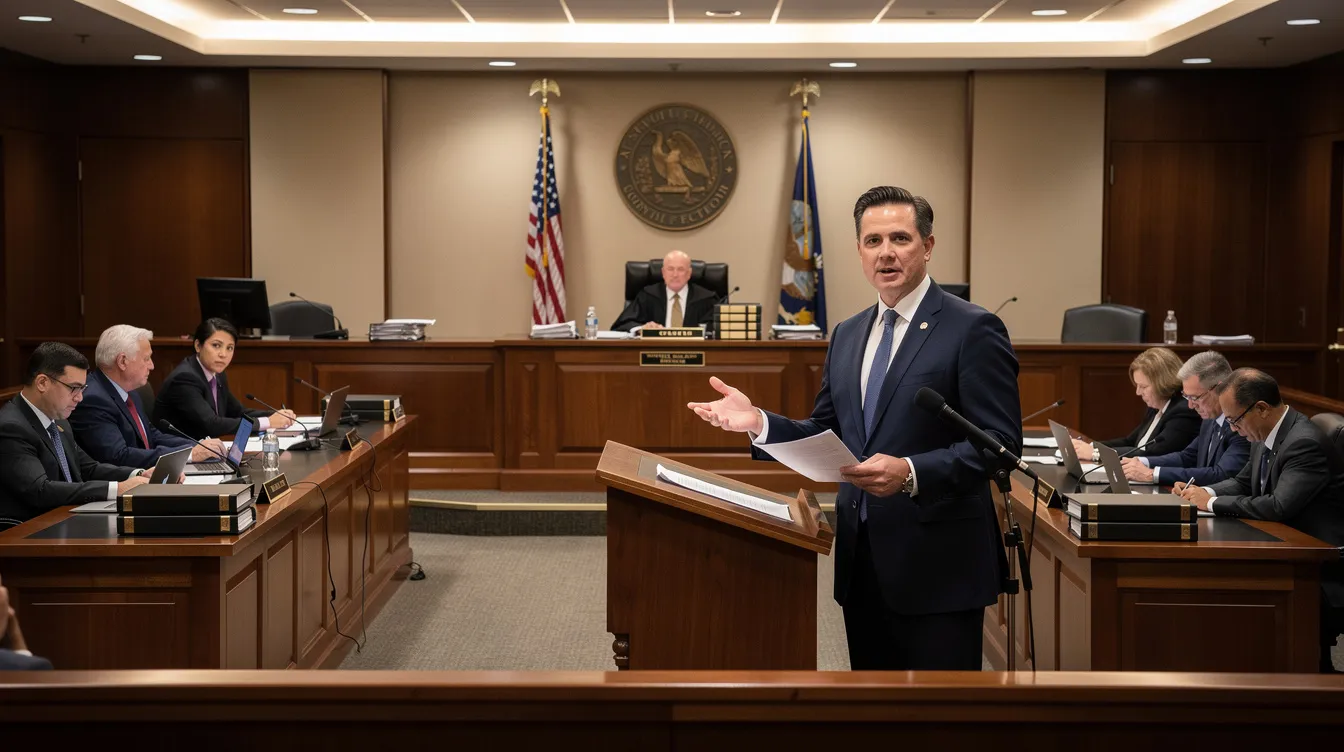
An expert witness is a person qualified by knowledge, skill, experience, training, or education to provide opinion evidence on issues beyond common understanding. Their power lies in translating special knowledge into testimony that helps judges and juries make decisions they couldn't make on their own. Cognitive depth allows experts to solve complex problems and predict outcomes - and in the courtroom, that ability is put to direct test.
Concrete examples:
- A pharmacology expert witness in a medication error case, testifying about standard of care in dosing and drug interactions.
- A fireground operations expert testifying about protocol and safety in firefighter negligence litigation, drawing from NFPA standards and operational logs.
- A real estate expert analyzing dual agency conflicts in California commercial transactions, assessing whether disclosure obligations were met.
Expert witnesses review records, prepare reports, and testify about standards of care, causation, and industry practice across personal injury, wrongful death, property loss, and complex commercial disputes. Their expert work includes writing detailed opinions, sometimes preparing visual models, and withstanding cross-examination.
Courts assess reliability through specific criteria. In U.S. federal courts, Rule 702 (amended in 2023) requires that testimony be based on sufficient facts and data, use reliable principles and methods, and that the expert applied those methods reliably. Known error rates, peer review, general acceptance, and controls are all evaluated. In UK courts, Civil Procedure Rules Part 35 and CPS guidance require that expert evidence be helpful, independent, relevant, and methodologically sound - with duty to the court overriding duty to the instructing party.
An expert's reputation depends on public and peer trust. Some experts also support media and insurance companies by explaining high-profile cases to the public, but their courtroom role demands strict independence. The importance of separating advocacy from analysis cannot be overstated - the interest of justice depends on it.
Finding and Evaluating an Expert in the Age of Search Engines
Modern expert discovery starts with digital tools, professional networks, and specialized databases. The process has changed fundamentally over the past decade.
Search engines surface experts through publications, court decisions, conference appearances, and optimized profiles. This visibility is useful but must be weighed against actual credentials. A high Google ranking does not equal deep expertise. Visibility and competence are different things.
Here are concrete evaluation criteria:
Criterion | What to Look For |
|---|---|
Education & certifications | Advanced degrees, board certification, specialized licensure in the relevant particular area |
Experience | Years in field, number and variety of cases or projects, depth of hands-on work |
Testimony history | Past reports admitted in court, behavior under cross-examination, any sanctions or exclusions |
Peer recognition | Publications, citations, invited speaker roles, leadership in professional societies |
Independence | No hidden conflicts of interest, willingness to state limitations, disclosure of funding |
Curated expert directories play a significant role. Experts.com has been operational since 1994 and connects clients directly with vetted professionals. Other data collection services maintain tens of thousands of expert profiles. The quality control and vetting processes behind these directories matter - some assess credentials rigorously, others are self-reported.
Practical steps for attorneys, insurers, and business teams:
- Define the precise question. "Did the hospital adhere to standard ventilator maintenance protocols in 2024?" is better than "What went wrong?"
- Shortlist specialists, not generalists. Expert advice from someone with deep, bounded expertise beats a broad overview from a generalist every time.
- Conduct interviews. Ask about methodology, error rates, and the limits of their knowledge.
- Review sample reports. Assess clarity, rigor, and communication style.
Experts today often maintain detailed digital footprints - articles, white papers on police risk or nuclear vibration, webinars, and conference presentations. These tools help clients assess whether the expert can explain complex topics clearly. Expert analysis published online serves as a preview of how that person will perform when it matters.

Networked and Collective Expertise in the Digital Era
Networked expertise refers to knowledge that emerges from interconnected groups rather than from a single authority figure. The world has shifted: no individual holds a monopoly on truth in any complex domain.
Wikipedia exemplifies dialogic expertise through collaborative knowledge production - its many-to-many editorial model produces articles that, at their best, synthesize broad community knowledge with cited sources. Open-source software communities and cross-institutional research collaborations on topics such as child safety on platforms represent similar models. Members of these networks contribute incremental knowledge, and the collective output often exceeds what any single researcher could produce.
The internet's vast archival information has weakened traditional gatekeeping. Authority has shifted toward those who can efficiently locate, interpret, and synthesize data across sources. A professor at a university still carries weight, but a well-sourced, transparent analysis from an independent researcher can carry just as much - if the methodology is sound.
There is a critical distinction between popularity-based "authority" metrics - follower counts, backlinks, social media influence - and genuine expertise grounded in evidence, peer review, and transparent methods. Marie-Line Germain developed a 16-item expertise measure that attempts to quantify real expertise beyond superficial indicators. These kinds of tools represent the field's effort to separate signal from noise.
Readers should treat online "experts" critically. Check for verifiable qualifications, past expert work, consistency across multiple reliable sources, and the absence of undisclosed conflicts. The science of expertise suggests that real authority is built slowly, tested repeatedly, and documented publicly.
Language, Culture, and Global Translations of "Expert"
Expertise is recognized across cultures but named and valued in locally specific ways. The concept translates, but the connotations shift.
Concrete translations:
Language | Term | Typical Context |
|---|---|---|
Traditional Chinese | 專家 (zhuānjiā) | Broad: consultants, specialists, authorities |
Spanish | experto | General use; also professional and academic |
Portuguese | perito | Legal and technical assessments (e.g., perito judicial) |
Arabic | خبير (khabeer) | Expert, authority in a field |
Russian | эксперт (ekspert) | General professional use |
German | Experte | Professional and academic contexts |
Multilingual sites and publishers - including organizations like cambridge university press - offer expert translations partly for SEO, helping global users find specialized knowledge in their own language. The technology behind multilingual search has improved, and using culturally accurate terms matters for discoverability.
While the word changes across languages, the core idea remains: proven, specialized competence recognized by a relevant community. A specialist by any name still needs the same thing - demonstrated, tested capability in a particular field.
Businesses operating internationally should use accurate, culturally appropriate terms when marketing or retaining experts across jurisdictions. In Brazil, "perito judicial" is a court-appointed expert. In China, "鉴定人" (jiàndìngrén) is someone appointed for technical evaluation. Getting these terms right is not a detail - it's a requirement for credibility in that market.
How to Work Effectively With an Expert
This section is for attorneys, businesses, insurers, and media teams who plan to engage experts. The mechanics of the relationship matter as much as who you pick.
Frame a clear, narrowly defined question. "Did the police department follow accepted risk mitigation frameworks in 2025?" is a question an expert can answer. "What went wrong?" is not. The more specific the assignment, the more useful the output. Vagueness leads to divergent opinions, wasted costs, and limited value.
Share complete documentation early. Case files, technical diagrams, raw data, and prior reports should reach the expert before any substantive work begins. Missing data forces later revisions. Experts form more elaborate memory representations than novices - but they need raw material to work with. Experts can categorize problems based on deep structures, but only if they see the full picture.
Prioritize independence. Instruct experts to be honest about both strengths and limitations. The "hired gun" risk is real - shaping an opinion to fit a preferred narrative destroys credibility and, in many jurisdictions, violates legal duties. UK CPS guidance states explicitly that the expert's duty to the court overrides their duty to the instructing party.
Evaluate communication. Can the expert explain forced reset triggers, medial malleolar fracture fixation, or complex financial models in language a judge or jury understands? Communication is not optional. An expert who cannot simplify without oversimplifying fails the fundamental test of expert advice.
Build long-term relationships. Retaining experts beyond single disputes allows recurring collaboration on training, policy development, and proactive risk assessment. Over the course of a long-term relationship, both sides develop a shared process and vocabulary. This produces more consistent, less contested work - and often proves more cost-effective across a week, a month, or a year of active cases.
Experts experts represent a resource, not a commodity. Their participation in your work should be structured, supported, and given the latitude to deliver honest conclusions. Define the question narrowly, vet the person rigorously, and let them do what they do. That's the difference between getting an opinion and getting the right answer.


