The 15% Tariff Reset: Who Absorbs the Cost, and Who Passes It Through?
We are launching primary research to determine how Fortune 500 procurement and sourcing leaders across consumer, industrial, and technology sectors are recalibrating supplier decisions, delivery schedules, and pricing strategies in response to the new 15% global tariff regime.
✦
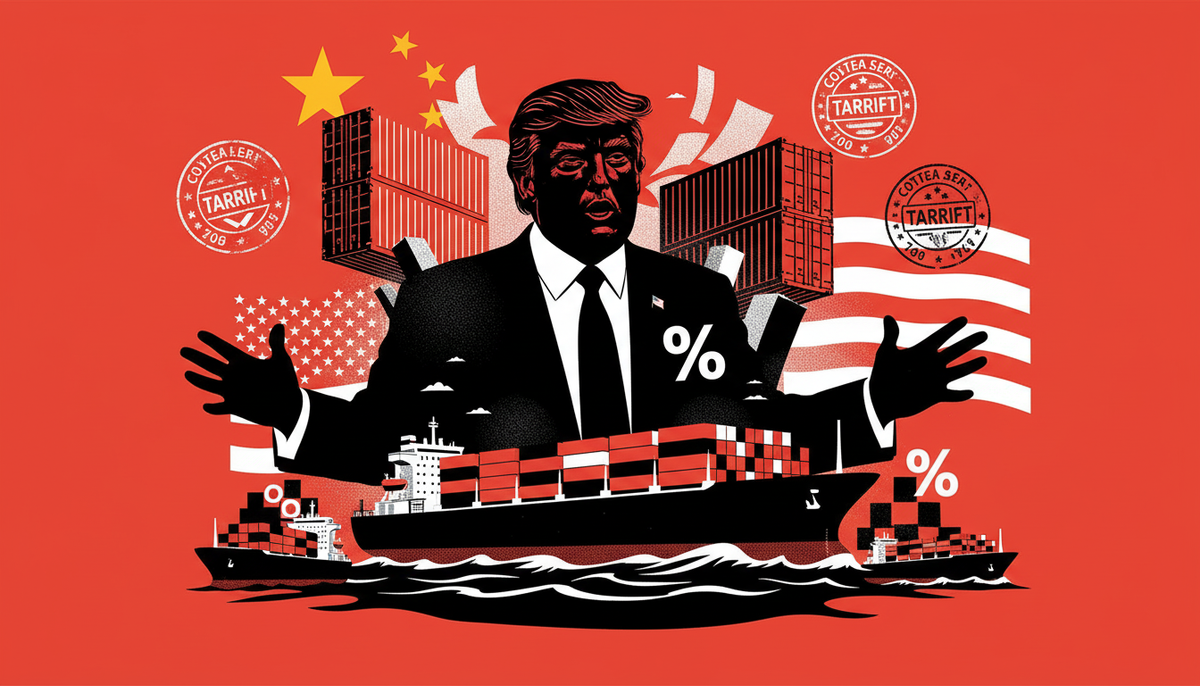
The Supreme Court struck down Trump's sweeping IEEPA tariffs on Friday in a 6–3 ruling. Within hours, Trump signed an executive order imposing a 10% blanket tariff under Section 122 of the Trade Act of 1974. By Saturday afternoon, he had raised it to 15%, the statutory maximum. The new duties take effect at 12:01 a.m. on Tuesday, February 24. We are launching primary research to answer the question that every import-exposed long/short book is now sizing positions around: how are procurement organisations across dozens of sectors re-engineering their sourcing, pricing, and vendor strategies when the rules change faster than the purchase orders?
For hedge fund analysts, this weekend created a paradox. The old tariff regime is dead. The new one is legally untested, structurally temporary, and already at its ceiling. The 15% duties would make this year's effective tariff rate 6%, according to Erica York at the Tax Foundation—a meaningful reduction from the IEEPA-era effective rate, which hit 7.7% in 2025, the highest since 1947. But the headline rate masks enormous dispersion. For many countries—including Brazil, Canada, China, India, Indonesia, Mexico, and South Africa—a 15% duty is actually better than the rates faced under the IEEPA tariffs. But countries like Argentina, Australia, Saudi Arabia, and the United Kingdom would face higher tariffs. The sourcing geography of a company's supply chain, not just its import intensity, determines whether this is a tailwind or a headwind.
The bull case is that the SCOTUS decision, combined with a lower effective rate, provides structural relief to import-heavy sectors. On Friday, consumer discretionary, industrial, real estate, and technology stocks finished the day as some of the best performers, outpacing less tariff-exposed sectors. Distributors and retailers could share in as much as $175 billion in tariff refunds from illegally collected IEEPA duties—a one-time cash injection that could bolster margins and inventory investment across consumer and industrial names.
The bear case is simpler but no less powerful. The 15% tariff is the highest rate allowed under Section 122, these tariffs are limited to 150 days unless extended by Congress, and no president has previously invoked Section 122. The administration is simultaneously launching Section 301 investigations on an "accelerated timeframe" against most major trading partners. The 150-day clock expires in late July. The replacement tariffs could be higher, lower, or structurally different. For any company negotiating supplier contracts, placing forward orders, or setting retail prices for the second half, this is an impossible planning environment.
US stock futures slid on Monday, with Dow futures dropping 0.4%, S&P 500 futures falling 0.5%, and Nasdaq 100 futures declining around 0.7%. GDP growth slowed to just 1.4% in Q4 2025, well below expectations, and consumer sentiment sits at 56.6. The macro backdrop is fragile enough that the difference between a company absorbing 200 basis points of tariff cost and passing it through could determine whether it beats or misses on the next two quarters. That gap between absorption and pass-through is not visible in public filings. It lives in the procurement offices of Fortune 500 importers.
Key Insights
- The legal basis for the new tariff is unprecedented and structurally temporary. Trump is implementing the tariff under Section 122 of the 1974 Trade Act, which allows the president to institute a "temporary import surcharge" of up to 15% if he finds there are "large and serious United States balance-of-payments deficits." The provision caps the duration at 150 days without Congressional extension. No president has previously invoked Section 122, meaning its use may face further legal challenges. For hedge fund analysts, the key implication is that every import-exposed company is now operating under a tariff regime with a hard expiry date in late July, followed by complete uncertainty about what replaces it.
- The country-level dispersion creates asymmetric long/short opportunities. Despite the revised level, Trump's universal tariff will still result in a major cut to tariffs applied to most key trading partners, including Mexico, Canada, and China. Companies sourcing primarily from China—where rates once reached 145%—or from India and Brazil, where rates topped 50%, just received a material cost reduction. Companies sourcing from countries that previously had low or negotiated rates, including the UK and Australia, now face a step up. A retailer sourcing primarily from Vietnam and China just received a de facto tariff cut. A UK-origin speciality importer just got hit with a new cost. The same 15% creates winners and losers depending on where the container ships are sailing from.
- Refund uncertainty is a hidden variable in near-term earnings. As of December 14, 2025, CBP reported that it had collected approximately $133.5 billion in tariffs under the IEEPA authority. The Supreme Court's ruling means refunds are legally owed, but "this is the first time a tariff has been declared unconstitutional with this amount of money at stake," as one senior customs director noted. Neither the Supreme Court's decision nor the Executive Order addressed refunds, leaving the issue to renewed proceedings before the US Court of International Trade. Companies that preserved their refund rights as importers of record stand to receive meaningful cash inflows. Those that did not may receive nothing.
- Customs systems have not yet caught up to the legal reality. Despite Friday's Supreme Court ruling, US importers are still paying duties on goods entering the country because US Customs has not yet updated its Cargo System Management Service. An estimated 211,000 containers of goods, valued at $8.2 billion, that arrived in US ports between Friday and Sunday will still be subject to IEEPA tariffs. The transition between the old regime and the new one is operationally messy, creating short-term cash flow disruption for importers simultaneously paying invalidated duties and preparing for new ones.
- The administration is already building the next tariff regime. US Trade Representative Jamieson Greer said the administration would open Section 301 investigations on "most major trading partners" on an "accelerated timeframe." Section 301 allows tariffs of up to 50% based on unfair trade practices, and the administration has already used Section 232 investigations to impose duties on steel, aluminium, copper, lumber, furniture, cars, and car parts. The 15% tariff is a bridge. What lies on the other side is unknown, and that uncertainty is what makes procurement decision-making across every import-exposed sector uniquely difficult right now.
Participation Opportunity
Woozle Research is inviting professional investors to sponsor or co-sponsor this primary research. Participation is collaborative. All funds receive full access to research outputs including interview summaries, transcripts, and the final synthesis report.
- Launch: February 25, 2026
- Delivery: March 10, 2026
- Participation: Limited to 5 funds
- Catalyst: Supreme Court IEEPA ruling, 15% Section 122 global tariff, 150-day expiry clock, cross-sector procurement recalibration
- Research: 30+ interviews with Procurement and Sourcing VPs across Fortune 500 consumer, industrial, and technology importers. 15+ interviews with customs brokers, freight forwarders, and trade compliance attorneys. 10+ channel checks with mid-cap manufacturers and distributors across tariff-exposed sectors.
- Deliverables: raw data, transcripts, synthesis report, analyst access
Sponsor this research
This research will proceed with a minimum of one fund and is limited to a maximum of five.
Email to confirm your interestThe Catalyst
The story of American tariff policy over the past thirteen months has been one of escalation, confusion, and corporate improvisation. When Trump announced his "Liberation Day" reciprocal tariffs in April 2025, importers across consumer, industrial, and technology sectors scrambled to reroute supply chains, renegotiate contracts, and stockpile inventory ahead of enforcement dates. The volatility seen throughout 2025 demonstrated how quickly policy shifts can distort import flows, create port congestion, or lead to temporary freight surges, prompting many importers to front-load goods—particularly consumer electronics, home goods, and industrial inputs.
Then the courts intervened. On May 28, 2025, a panel of judges at the US Court of International Trade unanimously ruled that the IEEPA tariffs were illegal, a decision upheld by the US Court of Appeals on August 29, 2025. The tariffs remained in effect during appeal, but companies began positioning for a potential reversal. Nearly 2,000 importers filed cases at the CIT challenging the IEEPA tariffs, seeking refunds. When the Supreme Court ruled on February 20, the legal question was settled. But the commercial chaos was just beginning.
Peter Theran, CEO of the Home Furnishings Association, captured the mood of the procurement world: "The No. 1 driver of the difficulty of managing your business is unpredictability and an inability to make alternative plans and invest in those plans, because you don't know what tomorrow will be." He relayed the sentiment of a CEO at one of the largest furniture retailers in the country, who said he would prefer the worst possible tariff outcome to the current state of limbo, because at least then he could build a plan and execute against it. That sentiment runs through every sector with import exposure.
The implications for long/short equity analysts are layered. On the long side, companies that successfully diversified sourcing away from the most tariff-exposed origins during 2025—and that preserved their importer-of-record status for refund claims—are positioned to capture a double benefit: lower forward duties and a one-time cash windfall. IEEPA-based tariffs directly affected pricing, margin, and inventory strategies for consumer staples companies such as Costco and Procter & Gamble, and consumer discretionary names like Amazon and TJX Companies. Large home furnishing retailers like RH, Williams-Sonoma, and Wayfair all grew sales and margins even as they faced higher import costs, with RH seeing sales grow almost 10% and Williams-Sonoma about 4%. These companies demonstrated pricing power under a harsher regime. A lower tariff environment could widen their margins further.
On the short side, the risk is concentrated in companies that over-earned during the IEEPA period by using tariffs as cover for aggressive price increases, and that now face a competitive reckoning as input costs fall. If input costs decline, firms get to choose: cut prices to defend share, or hold prices and rebuild margins. The companies that try to hold prices while competitors pass savings through to consumers will lose volume. The gap between winners and losers on this dimension is not observable from earnings transcripts. It requires direct conversations with the procurement leaders making these decisions in real time.
The 150-day clock is the critical structural feature. The Trump administration is likely to launch or conclude investigations under other authorities and try to replicate IEEPA tariffs before the 15% tariff under Section 122 expires in five months. That creates a window of relative clarity, followed by a second wave of uncertainty. Companies making sourcing decisions for the back half of 2026 and the holiday season cannot wait for the July resolution. They are placing bets now. Understanding the direction and magnitude of those bets is the single most valuable informational edge a hedge fund can hold in import-exposed sectors.
Key Intelligence Questions
The research will focus on the commercial and operational dynamics that determine which companies across consumer, industrial, and technology sectors are best and worst positioned under the new tariff regime. Each question targets a specific input to the long/short investment model and is designed to be answered through direct conversations with Procurement and Sourcing VPs, trade compliance officers, and supply chain leaders at Fortune 500 importers.
Sourcing Recalibration: Are Purchase Orders Being Paused, Redirected, or Accelerated?
The most immediate commercial question is whether companies are treating the 15% tariff as a planning baseline or as a transient rate that will be superseded within months. If procurement teams are treating 15% as durable, they will optimise sourcing around it—potentially shifting volume toward countries where the effective rate dropped, such as China and Vietnam. If they view it as a temporary bridge before higher Section 301 duties arrive, they may hold orders, build inventory buffers, or accelerate shipments ahead of the July expiry.
The behaviour varies by sector. A consumer electronics importer with a 90-day ocean freight cycle faces different timing constraints than an apparel company placing orders six months ahead of the retail floor. An industrial distributor sourcing precision components from Germany operates under different lead times than a home goods retailer pulling containers from Southeast Asia. Public earnings calls will provide high-level commentary on tariff assumptions, but they will not reveal the granular decisions being made at the purchase order level right now.
Key Intelligence Question
Has the 15% rate been incorporated into forward purchase orders as a durable planning assumption, or are procurement teams treating it as a temporary bridge and hedging against higher Section 301 duties after the July expiry? Are any companies pre-shipping to beat potential rate increases, and is the behaviour materially different across consumer, industrial, and technology sectors?
Pricing and Pass-Through: Who Bears the Cost?
Retail pricing is a pipeline: goods on shelves were ordered weeks or months ago, often under contracts set in the prior tariff regime. Even if new shipments arrive at lower duty rates, firms do not always reprice immediately, especially if demand is steady and competitors do not move first. Prices tend to be sticky.
The central question for long/short analysts is which companies will use the tariff reduction to rebuild margins and which will pass savings through to consumers to defend or gain market share. A company that absorbed 300 basis points of margin compression under the old regime and now sees input costs fall by 200 basis points has a choice. It can rebuild margin toward historical levels, which supports the earnings beat thesis. Or it can lower shelf prices to drive volume, which supports the revenue growth thesis but delays margin recovery. The competitive dynamics within each category—not just the tariff arithmetic—will determine which path each company takes.
Key Intelligence Question
Have internal pricing models at major retailers and consumer goods companies been updated to reflect the lower duty rate? How quickly will any cost savings flow through to shelf prices or promotional activity, and are competitors signalling a willingness to cut prices or hold them? Which companies are prioritising margin rebuild versus market share defence?
Vendor Selection and Supply Chain Diversification: Is the Supply Chain Actually Moving?
One of the most important claims made during the IEEPA tariff era was that companies were actively diversifying supply chains away from China and other high-tariff origins. The SCOTUS ruling and the lower 15% rate raise a critical follow-up question: does the supply chain diversification continue, reverse, or stall?
If the 15% flat rate makes China and Vietnam competitive again relative to nearshored alternatives in Mexico or domestic suppliers, companies may quietly shift volume back. That would undermine the reshoring narrative that has supported industrial names and nearshoring beneficiaries. Conversely, if companies have invested meaningfully in alternative supply chains and those investments are now sunk, the diversification may persist regardless of the rate change.
Key Intelligence Question
Are supplier diversification initiatives launched during 2025 being paused, reversed, or accelerated under the new tariff structure? Has the 15% flat rate made China and Vietnam sourcing competitive enough to pull volume back from nearshored alternatives in Mexico and domestic suppliers—and have vendor selection criteria changed materially in the past 72 hours?
Margin Impact: What Does 15% Actually Cost at the Product Level?
The headline tariff rate is a blunt instrument. The actual margin impact depends on the product category, the country of origin, the pre-existing duty rate, the proportion of the landed cost represented by the tariff, and the elasticity of demand for the end product. A 15% tariff on a $500 consumer electronics product sourced from a country that previously paid 25% is a net positive. The same 15% on a $20 apparel item sourced from a country that previously paid 10% is a net negative.
For hedge fund analysts modelling earnings for names like Home Depot, Costco, Nike, Apple, Deere, or Caterpillar, the aggregate tariff rate is insufficient. What matters is the weighted average effective rate across each company's actual import mix, and how that translates into cost of goods sold at the SKU level. This data is not available in 10-Ks or earnings transcripts. It lives inside procurement databases and supplier contracts.
Key Intelligence Question
What is the net margin impact of the transition from the IEEPA regime to the 15% Section 122 rate across primary product categories at major importers—including changes in landed cost, duty drawback eligibility, and any renegotiation of supplier terms triggered by the policy shift? Where is the dispersion greatest between companies that benefit and companies that are worse off?
The Refund Variable: Who Gets Paid, and When?
Tariffs under IEEPA have brought in more than $175 billion. That money is legally owed back to the importers who paid it, but the mechanics are uncertain. Kuehne+Nagel urged its clients to have all customs documents in order, noting that "the CIT is expected to handle any refund mechanisms, but no timelines exist; high volumes of claims could create years-long delays."
For the long/short trade, the refund question matters because it creates a potential one-time earnings event for companies that are importers of record and that preserved their claim rights. But the distribution matters: not every firm preserved refund rights, and not every firm paid the same effective rates. The dispersion between companies that receive significant refunds and those that do not could be material enough to drive relative performance across the sector.
Key Intelligence Question
Have major importers filed or are they preparing to file refund claims with the Court of International Trade? What is the expected magnitude of refunds relative to total duties paid, the anticipated timeline for cash receipt, and are any companies factoring refund expectations into current pricing, inventory, or capital allocation decisions?
How to Participate
Woozle Research is inviting professional investors to sponsor or co-sponsor this primary research. Participation is collaborative. All funds receive full access to research outputs including interview summaries, transcripts, and the final synthesis report.
- Launch: February 25, 2026
- Delivery: March 10, 2026
- Participation: Limited to 5 funds
- Catalyst: Supreme Court IEEPA ruling, 15% Section 122 global tariff, 150-day expiry clock, cross-sector procurement recalibration
- Research: 30+ interviews with Procurement and Sourcing VPs across Fortune 500 consumer, industrial, and technology importers. 15+ interviews with customs brokers, freight forwarders, and trade compliance attorneys. 10+ channel checks with mid-cap manufacturers and distributors across tariff-exposed sectors.
- Deliverables: raw data, transcripts, synthesis report, analyst access
Sponsor this research
This research will proceed with a minimum of one fund and is limited to a maximum of five.
Email to confirm your interestThis document is for informational purposes only and does not constitute investment advice or a recommendation to buy or sell any security. Woozle Research conducts primary research on behalf of institutional investors. All research is conducted in compliance with applicable regulations.