Nvidia's Trillion-Dollar Pipeline: Locked-In Demand or Letters of Intent?
We are launching primary research to determine whether Nvidia's $1 trillion order disclosure represents firm purchase commitments from hyperscalers or flexible demand signals vulnerable to macro pressure, capex rationalisation, or competitive substitution.
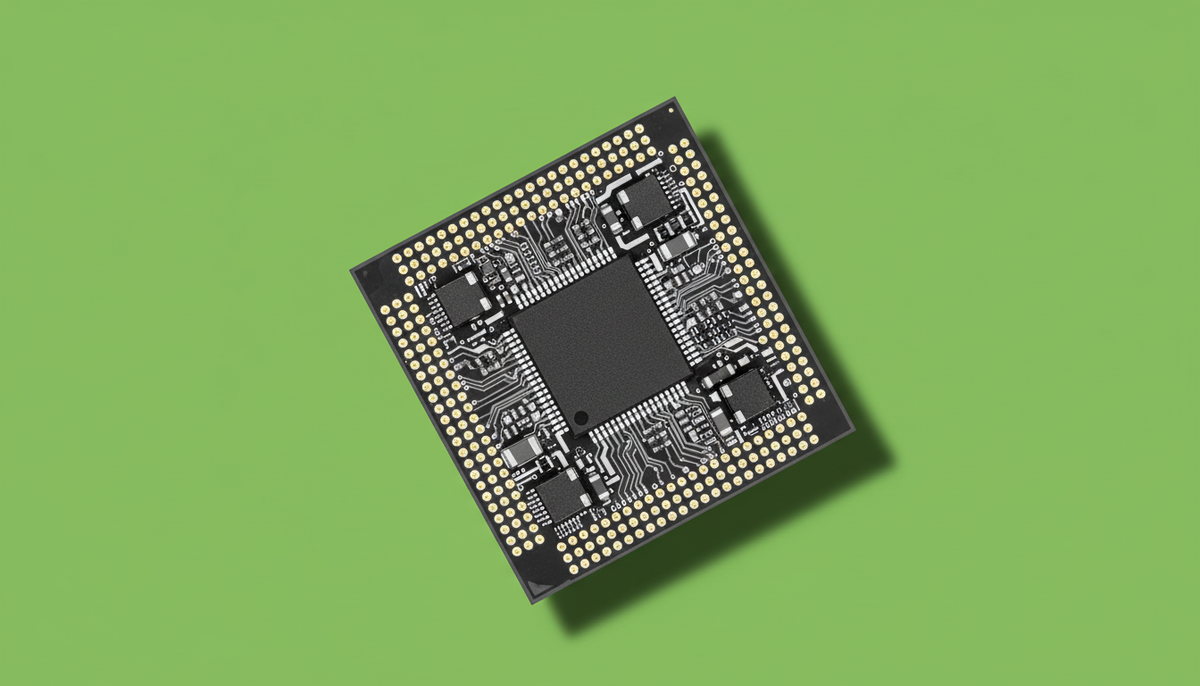
We are launching primary research to determine whether Nvidia's $1 trillion order disclosure represents firm purchase commitments from hyperscalers or flexible demand signals vulnerable to macro pressure, capex rationalisation, or competitive substitution.
Jensen Huang walked onto the stage at the SAP Center in San Jose on Monday evening and doubled the number that underpins the entire AI infrastructure trade. At Nvidia's annual GTC developer conference, the CEO told a packed house he expects purchase orders for Blackwell and Vera Rubin systems to reach $1 trillion through 2027 — upgrading the company's prior projection of a $500 billion revenue opportunity between the two chip generations. The stock spiked to $188.88, up nearly 5%, before fading to close at $183.22, a gain of just 1.65%.
That fade tells its own story. The market heard the number, reached for it, then paused. We are launching primary research to find out why.
The financial backdrop makes the headline look unassailable. Nvidia reported Q4 fiscal 2026 adjusted EPS of $1.62 versus the $1.53 consensus, on revenue of $68.13 billion versus the $66.21 billion estimate — a 73% year-over-year increase. Data centre revenue climbed 75% to $62.3 billion. Q1 fiscal 2027 guidance of $78 billion landed $5.4 billion above consensus, the fourth consecutive quarter of accelerating growth. Gross margins recovered to 75.0% GAAP, and the company expects to hold margins in the mid-70s through fiscal 2027. By every traditional measure, Nvidia is executing at a level unmatched in semiconductor history.
But the bull case has quietly become more complicated. Investors who looked past the headline determined the $1 trillion figure was not as far above existing consensus as it initially appeared. Scepticism has grown over the sustainability of AI spending, with Wall Street turning cautious on hyperscaler capex levels and concerns mounting that competition from AMD and custom silicon from the hyperscalers themselves could pressure margins. The $1 trillion figure is denominated in "expected orders" — a category that sits somewhere between firm purchase obligations and letters of intent. If Iran-driven oil disruptions or a broader macro slowdown force hyperscalers to rationalise capex budgets, those orders could compress, defer, or disappear.
The distinction between demand appetite and wallet capacity is the single most important variable in Nvidia's forward model. The catalyst window is compressed. Nvidia's financial analyst Q&A takes place Tuesday, March 17, and could provide harder numbers on order composition and customer commitment levels. Over the next 60 to 90 days, the market will absorb the first Vera Rubin shipping timelines and signals from hyperscaler earnings calls about whether capex budgets are holding, expanding, or being quietly revisited.
Key Insights
Nvidia doubled its disclosed demand pipeline from $500 billion to $1 trillion in a single disclosure. Huang said in October 2025 that the company had $500 billion in AI chip orders through 2026. On Monday, he said he expects the company to reap "at least" $1 trillion in revenue from its newest AI chips through 2027. The qualifier "at least" is notable. Huang added: "I am certain computing demand will be much higher than that." This is the first time management has explicitly quantified a multi-year order book of this magnitude.
Q1 fiscal 2027 guidance exceeded consensus by over $5 billion. Revenue guidance of $78.0 billion, plus or minus 2%, came in significantly above the $72.6 billion market consensus. Critically, the company is not assuming any data centre compute revenue from China in the outlook — meaning the upside is built entirely on Western and sovereign AI demand.
The Vera Rubin platform represents a full architectural generation leap. The system, made up of 1.3 million components, delivers 10 times more performance per watt than Grace Blackwell, is five times faster for inferencing tasks, and 3.5 times faster in training workloads. Microsoft Azure and CoreWeave are among the first to deploy instances, with partner availability starting in the second half of 2026.
Nvidia absorbed Groq in a $20 billion deal and unveiled the first integrated product. The Groq 3 Language Processing Unit is Nvidia's first chip from the startup it acquired in December, designed to sit beside the Vera Rubin rack-scale system. The move signals Nvidia is building a heterogeneous compute stack rather than relying solely on GPU architectures — a pre-emptive strike against the inference market before competitors can establish beachheads.
The stock's muted reaction signals the debate has shifted from "how big" to "how firm." The market heard the $1 trillion figure and faded the rally. Customers face realities of budget discipline, power availability, and proof that new deployments pay off. There is a meaningful difference between product demand and wallet capacity, and no public data resolves which side of that line the pipeline sits on.
Competitive pressure is real but structurally constrained. Revenue share peaked near 87% in 2024 and is projected to decline to 75% by 2026 as custom silicon from Google, AWS, and Meta scales. That share erosion is concentrated in inference — the workload category that is now growing fastest. In training, and in the enterprise and sovereign segments where CUDA lock-in is strongest, Nvidia's position remains difficult to replicate.
Participation Opportunity
Woozle Research is inviting professional investors to sponsor or co-sponsor this primary research. Participation is collaborative — all funds receive full access to research outputs including interview summaries, transcripts, and the final synthesis report.
| Launch | March 24, 2026 |
| Delivery | April 4, 2026 |
| Participation cap | Limited to 5 funds |
| Catalyst | GTC 2026 $1 trillion order disclosure, Vera Rubin platform launch, Groq 3 LPU integration, Q1 FY27 guidance beat, hyperscaler capex durability debate |
Research scope:
- 40+ data centre procurement and cloud infrastructure channel checks
- 20+ former Nvidia and server OEM employee interviews
- 15+ competitor and hyperscaler custom silicon team interviews
Deliverables: Raw data, transcripts, synthesis report, analyst access
This research will proceed with a minimum of one fund and is limited to a maximum of five.
Key Intelligence Questions
Order Composition: How Firm Is the Trillion-Dollar Pipeline?
The entire investment debate now hinges on the nature of the commitments behind Huang's $1 trillion figure. There is a meaningful difference between binding purchase orders with delivery schedules and penalties, multi-year framework agreements with volume flexibility, and expressions of demand intent that can be deferred or cancelled without cost. Nvidia has not disclosed where on that spectrum the $1 trillion sits.
The bull case assumes hyperscaler capex momentum is self-reinforcing. Combined capex forecasts for the four major hyperscalers could approach $700 billion this year. If those budgets hold, converting pipeline to revenue is straightforward. The bear case rests on the Iran-driven oil shock, which has pushed crude above $100 and introduced genuine macro uncertainty. A 10% deferral across the pipeline would represent $100 billion in pushed-out or lost revenue.
The research will ask former hyperscaler infrastructure planning executives: do Vera Rubin commitments at AWS, Azure, Google Cloud, Meta, and Oracle carry contractual penalties for cancellation, or do they include volume adjustment clauses that allow reduction without cost?
Vera Rubin Transition: Accelerator or Cannibal?
Nvidia's annual architecture cadence is both its greatest competitive weapon and its most complex commercial challenge. Vera Rubin's 10x performance-per-watt advantage over Grace Blackwell is extraordinary — but it creates a transition risk. If customers defer Blackwell purchases to wait for Vera Rubin, the bridge quarter revenue trajectory could soften. If Vera Rubin's production ramp encounters delays, the gap between Blackwell wind-down and Rubin ramp-up could compress near-term revenue below consensus.
CFO Kress confirmed samples have shipped to customers, but sampling and volume production are different commercial milestones. Server OEMs at Dell, Supermicro, and HPE must qualify, integrate, and begin shipping Vera Rubin systems before customer revenue materialises — each step introducing execution risk, particularly given the global memory shortage already constraining Nvidia's gaming business.
The research will ask server OEM product managers and cloud infrastructure architects: is Vera Rubin accelerating incremental orders or cannibalising existing Blackwell pipeline, and are enterprise customers pausing deployment decisions to wait for the next generation?
Inference Economics: Can Nvidia Hold Pricing as Workloads Shift?
Training built Nvidia's data centre franchise. Inference will determine whether it endures at current margins. Huang declared at GTC that "the inflection point of inference has arrived" — but inference workloads are higher volume and more price-sensitive than training, and they are precisely where custom silicon from hyperscalers has the clearest competitive pathway.
Nvidia's response is architectural: Vera Rubin claims a 10x reduction in inference token costs, and the Groq 3 LPU adds a purpose-built inference accelerator to the stack. But the question is whether cost reduction at the hardware level translates to sustained pricing power at the system level, or whether it simply lowers the floor that competitors need to meet.
The research will ask cloud infrastructure architects running production inference workloads: what are the real cost-per-token comparisons across Nvidia GPUs, custom silicon, and AMD accelerators in live production environments — not vendor benchmarks — and is Nvidia's inference cost advantage narrowing in practice?
Hyperscaler Capex Durability: Will Budgets Hold Through the Macro Shock?
The entire AI infrastructure trade rests on one assumption: that hyperscaler capex budgets continue expanding. A recent Moody's report flagged $662 billion in future data centre lease commitments that have not yet begun and remain off balance sheets. The Iran conflict has pushed oil above $100 per barrel, introduced genuine recessionary risk, and created an environment where even the most committed AI investors may face board-level pressure to moderate spending.
The risk is not that hyperscaler capex collapses. It is that the rate of growth decelerates — which at Nvidia's current trajectory and valuation would be enough to force a re-rating. Customers are already under pressure to prioritise workloads, reuse existing clusters, and extract more performance per dollar from existing deployments.
The research will ask senior cloud infrastructure budget owners and procurement leads: have 2026 capex envelopes been formally approved at the levels implied by public guidance, or are there internal review processes triggered by the macro deterioration, and are order volumes for H2 2026 locked or subject to quarterly budget review?
Competitive Displacement: Where Is Custom Silicon Winning Real Workloads?
Nvidia holds 80 to 90% of the AI accelerator market by revenue. In training specifically, share exceeds 90%. In inference, the figure drops to 60 to 75% due to custom silicon and CPU competition. That gap is the competitive vulnerability — and as inference becomes the dominant workload category, the aggregate share number will drift toward the lower figure unless Nvidia can defend its position.
Microsoft's Maia 200 chips are now powering a significant portion of ChatGPT's inference workloads. Google's TPU v7 and Amazon's Trainium 3 are moving from internal pilots to production-scale deployment. The question is whether these programmes are capturing incremental workloads that would not have run on Nvidia hardware, or actively displacing Nvidia GPUs from workloads previously running on Nvidia infrastructure. Custom silicon does not need to displace Nvidia wholesale to matter — it only needs to shave points off incremental demand or compress pricing in specific workloads.
The research will ask engineering managers and infrastructure leads within hyperscaler AI teams: which tasks are being migrated from Nvidia GPUs to custom silicon, at what scale, and with what performance and cost trade-offs in real production environments?
How to Participate
Woozle Research is inviting professional investors to sponsor or co-sponsor this primary research. All funds receive full access to research outputs including interview summaries, transcripts, and the final synthesis report.
Launch: March 24, 2026 | Delivery: April 4, 2026 | Cap: 5 funds maximum
This research will proceed with a minimum of one fund. Places are allocated on a first-come basis.
This document is for informational purposes only and does not constitute investment advice or a recommendation to buy or sell any security. Woozle Research conducts primary research on behalf of institutional investors. All research is conducted in compliance with applicable regulations.