Maersk and Hapag-Lloyd: Windfall or Trap?
We are launching primary research to determine whether the Strait of Hormuz closure delivers a sustainable freight rate tailwind for Maersk and Hapag-Lloyd, or whether rising costs, stranded assets, and demand destruction offset the headline rate surge.
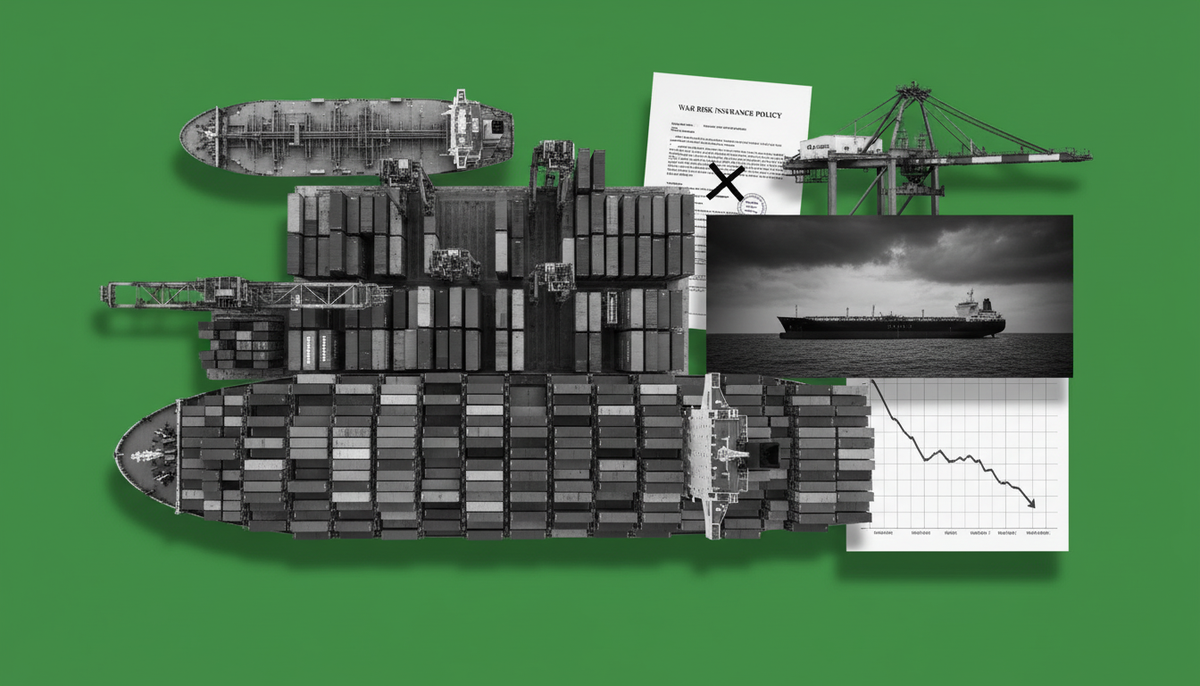
The world's most important maritime chokepoint is effectively shut. The crisis began on 28 February 2026, following joint military strikes by the United States and Israel on Iran. Iran launched retaliatory attacks on Israeli territory and US military bases in Gulf states, while the IRGC issued warnings prohibiting vessel passage through the strait, leading to an effective halt in shipping traffic, with tanker traffic dropping by approximately 70% before falling to near zero. Within 48 hours, every major container line on earth suspended Hormuz transits. Hapag-Lloyd said all vessels transiting through the Strait of Hormuz would be suspended, citing the safety and security of its crews. Maersk said it was halting passage through the Suez Canal and the Strait of Hormuz for safety reasons. Both companies rerouted services around the Cape of Good Hope, reversing the gradual Red Sea return they had been cautiously planning for weeks.
The financial setup is striking. Maersk's full-year 2025 revenue stood at $54.0 billion, with EBITDA of $9.5 billion and EBIT of $3.5 billion, reaching the top end of guidance. But those numbers were already in decline — group EBITDA fell 21%, while Hapag-Lloyd posted a 28% drop, largely due to lower freight rates despite increased cargo volumes. Before the geopolitical escalation, Maersk had projected global container trade growth of 2 to 4% in 2026, while guiding for EBITDA of $4.5 billion to $7 billion — a range that at the midpoint would represent roughly a 40% decline compared with 2025. That guidance assumed a gradual Red Sea reopening and continued overcapacity pressure. Both assumptions are now obsolete.
Bulls see a replay of 2024's Houthi-driven rate surge, amplified. ONE CEO Jeremy Nixon described the situation as a "black swan" event, noting that approximately 100 container ships among 750 vessels are currently ensnared in the region — roughly 10% of the global container fleet. If multiple carriers reroute around the Cape, excess vessel capacity will be absorbed by the extra mileage per transit. The overcapacity problem that was supposed to crush margins through 2026 could vanish almost overnight if the disruption persists. Emergency surcharges are already being levied. Hapag-Lloyd imposed a war risk surcharge effective 2 March of $1,500 per TEU and $3,500 per container for reefers and specialty cargoes.
Bears see costs rising as fast as rates. War risk premiums have surged from 0.2% to 1% of vessel value in days, adding hundreds of thousands of dollars in operational costs per voyage. Bunker fuel costs are climbing alongside crude, which has surged past $82 per barrel for Brent. Cape of Good Hope rerouting adds 10 to 14 days per Asia-Europe voyage, consuming vessel capacity but also burning more fuel per trip and slowing container turns. If the disruption extends beyond a few weeks, demand destruction becomes the real risk. The question is whether rate surcharges more than offset cost headwinds — and for how long.
Participation Opportunity
Woozle Research is inviting professional investors to sponsor or co-sponsor this primary research. All funds receive full access to research outputs including interview summaries, transcripts, and the final synthesis report. Email sales@woozleresearch.com for more information.
| Launch | 5 March 2026 |
| Delivery | 17 March 2026 |
| Participation | Limited to 5 funds |
| Catalyst | Strait of Hormuz closure, Cape of Good Hope rerouting, emergency surcharges, Maersk 2026 guidance obsolescence, Hapag-Lloyd ZIM integration during wartime disruption |
| Research | 30 expert interviews across freight forwarding, terminal operations, beneficial cargo owners, carrier operations, war risk insurance, and supply chain management |
| Deliverables | Raw data, transcripts, synthesis report, analyst access |
This research will proceed with a minimum of one fund and is limited to a maximum of five.
Key Insights
The Strait of Hormuz is effectively closed, and all major carriers have suspended transits. Maersk, MSC Group, CMA CGM, Hapag-Lloyd, COSCO, and Emirates SkyCargo have all restricted or halted bookings through the region. Maersk has paused future Trans-Suez sailings through the Bab el-Mandeb Strait and is rerouting its ME11 and MECL services around the Cape of Good Hope. This is not a precautionary pause. It is a full operational halt across the region.
Ten percent of the global container fleet is stranded or rerouted. Approximately 750 vessels are currently backed up due to the closure, including around 100 container ships. Major ocean carriers have already suspended new bookings to and from Middle East ports, creating an abrupt halt in cargo flows through the region. The effective capacity reduction is even larger when Cape rerouting mileage is factored in.
Maersk's 2026 guidance is already stale. Guidance assumed global container volume growth of 2 to 4% and scenarios of a gradual Red Sea reopening. With a large-scale return of container ships to the Red Sea now unlikely, freight rates will not fall as hard as previously expected. The guidance framework embedded an overcapacity headwind. The Hormuz closure reverses that dynamic entirely.
Hapag-Lloyd's $4.2 billion ZIM acquisition adds a second layer of complexity. The combined entity will operate over 400 vessels with capacity exceeding 3 million TEU. Integrating a major carrier while simultaneously managing a wartime disruption across some of its most important trade lanes is an execution challenge without recent precedent.
Insurance markets are withdrawing cover, amplifying the disruption. Marine insurers including Gard, Skuld, NorthStandard, and the London P&I Club have scrapped war risk cover for ships in the region. Without war risk insurance, commercial vessels cannot legally or practically transit the affected area, even if the military situation stabilises. The insurance withdrawal creates a secondary bottleneck that could delay the resumption of normal service well beyond any ceasefire.
Port congestion and equipment imbalances are building rapidly. Jebel Ali suffered a fire caused by falling drone debris. Container imbalances could worsen, particularly for 40-foot high-cube and reefer units in Asia. This is not just a vessel problem — it is a cascading equipment and terminal problem that affects shippers with no direct Middle East exposure.
The Catalyst
Container shipping has been in a perpetual state of disruption since late 2023, when Houthi attacks on commercial vessels in the Red Sea forced carriers to reroute around Africa for the first time in decades. That disruption proved enormously profitable for the major lines. Rerouting absorbed excess fleet capacity, pushed spot rates higher, and handed carriers like Maersk and Hapag-Lloyd a margin buffer they had not anticipated. Both companies delivered 2024 results well above initial guidance. CEO Vincent Clerc noted Maersk "delivered a strong performance and high value for our customers in a year where supply chains and global trade continued to be reshaped by evolving geopolitics."
The Hormuz crisis is a different animal. The Red Sea disruption affected a single corridor. The Hormuz closure threatens two corridors simultaneously, along with the region's container transshipment hubs, oil supply, LNG production, and air cargo network. Energy Aspects founder Amrita Sen noted that while a full closure is unlikely given US military superiority, the US "will not be able to control these one-off attacks on tankers and that is enough to make the market extremely cautious about sending vessels in." That observation captures the central dynamic. The disruption does not require a full blockade. It requires enough threat to make underwriters and shipowners unwilling to take the risk.
The commercial consequences are cascading in real time. Maersk and Hapag-Lloyd announced the rerouting of their Gemini Cooperation Trans-Suez services MECL and ME11 around the Cape of Good Hope. These are not marginal routes — they are high-volume services connecting the Middle East, India, the Mediterranean, and the US East Coast. The rerouting adds weeks to transit times and ties up vessels that would otherwise be deployed elsewhere. Peter Sand, chief analyst at Xeneta, said higher container shipping rates should be factored in for the Middle East region at least for as long as the conflict persists, noting there is "no real alternative" to ocean freight.
The timing is particularly punishing for both carriers. The Gemini Cooperation, their operational alliance launched in mid-2025, had just begun delivering the schedule reliability and cost savings both companies had promised. Pulling services out of the Red Sea and Hormuz corridor disrupts the network design that underpins Gemini's entire value proposition. Meanwhile, Hapag-Lloyd CEO Rolf Habben Jansen's $4.2 billion ZIM acquisition — a deal struck when ZIM's modern fleet, strong transpacific presence, and digital capabilities looked like a complementary fit — now arrives with ZIM carrying direct exposure to the Eastern Mediterranean and Middle East trades at the centre of the conflict. Integrating an acquisition while your shared trade lanes are under military threat is not a scenario covered in the merger playbook.
The bull case is simple but powerful. Structural overcapacity was the single biggest threat to container shipping profitability in 2026. The Drewry World Container Index had fallen 32% over the prior year, dropping to $1,899 per 40-foot container. If the Hormuz closure persists, the capacity equation inverts. Vessels tied up in rerouting, stranded at anchor, or withdrawn from service absorb the fleet surplus. Rates rise. Surcharges compound. The $4.5 billion floor on Maersk's EBITDA guidance starts to look conservative rather than aspirational.
The bear case is equally straightforward. Rising bunker fuel costs, war risk premiums, slower container turns, port congestion, equipment imbalances, and potential demand destruction all eat into the rate premium. The net margin impact is not obvious. And if de-escalation comes quickly, the rate surge evaporates and the market is left with the overcapacity problem it had before, plus the costs of rerouting and schedule disruption that have not yet been recovered. Nixon warned that if the closure persists beyond 25 days, oil production sites in the Middle East may have to curtail activity, potentially driving crude toward $100 a barrel. That timeline implies a decision point before the end of March. The next 30 days will determine which narrative prevails.
Key Intelligence Questions
The research will focus on the commercial and operational dynamics that determine whether the Hormuz disruption is a net positive or net negative for Maersk and Hapag-Lloyd's 2026 earnings, and how the cascading effects flow through global supply chains.
Rate Pass-Through: Do Surcharges Stick, or Do They Leak?
The headline numbers suggest carriers are moving aggressively to protect margins. Hapag-Lloyd introduced a war risk surcharge of $1,500 per TEU for standard containers and $3,500 for reefer and special equipment. CMA CGM imposed emergency surcharges of $2,000 to $4,000 per container depending on type. But surcharges announced and surcharges collected are different things. During the 2024 Red Sea disruption, shippers with long-term contracts were partially shielded from spot rate spikes, and some carriers absorbed cost increases to protect customer relationships.
The question now is whether carriers can pass through the full incremental cost of war risk premiums, Cape rerouting, and bunker surcharges — or whether competitive dynamics and contractual protections dilute the rate benefit. Freight forwarders handling Asia-Europe and Middle East volumes will reveal whether emergency surcharges are being accepted by beneficial cargo owners or negotiated down. Logistics managers at major retailers and industrial importers sourcing through Persian Gulf ports can confirm the actual landed cost increase versus the announced surcharge.
Key Intelligence Question: Are the emergency war risk and Cape rerouting surcharges being collected in full across spot and contract customers? Where are shippers pushing back, and how are carriers responding to protect both margin and customer relationships simultaneously?
Cost Escalation: How Fast Does the Bill Rise?
The bull narrative focuses on revenue. The bear narrative focuses on costs. War risk premiums have surged from 0.2% to 1% of vessel value in days, adding hundreds of thousands of dollars in operational costs for a single voyage. Bunker fuel costs are tracking crude oil higher, with Brent above $82. Cape of Good Hope routing adds roughly 3,500 nautical miles to a standard Asia-Europe voyage, consuming more fuel per trip while simultaneously extending voyage duration and reducing the number of round trips a vessel can complete per year.
Each of these cost items is quantifiable in theory but opaque in practice, because the actual impact depends on fleet deployment decisions, charter rates, hedging positions, and contract structures that are not disclosed in public filings. War risk insurance underwriters and P&I club managers can clarify how quickly premiums are being repriced and whether coverage gaps are forming that could delay the resumption of normal service. Former Maersk and Hapag-Lloyd operations directors can estimate the per-voyage cost differential between Suez and Cape routing under current fuel and insurance conditions.
Key Intelligence Question: What is the realistic all-in cost differential between Suez and Cape routing for a standard Asia-Europe service call today, and how quickly are war risk premiums and bunker surcharges being absorbed into actual voyage economics versus carrier guidance assumptions?
Demand Destruction: When Do Shippers Stop Shipping?
Disruption-driven rate spikes benefit carriers only if volumes hold. Maersk has suspended all vessel crossings in the Strait of Hormuz as well as the shipping of reefer, dangerous, and special cargo in and out of the UAE, Oman, Iraq, Kuwait, Qatar, Bahrain, Jordan, and Saudi Arabia until further notice. When bookings are frozen and transit times double, the risk is that shippers defer orders, switch to air freight for critical goods, or simply absorb the disruption by running down inventory.
The longer the disruption lasts, the more likely demand destruction becomes — particularly for temperature-sensitive products, just-in-time manufacturing inputs, and seasonal consumer goods. Supply chain managers at European automotive and electronics manufacturers can reveal whether production schedules are being adjusted due to component delays routed through Middle Eastern ports. Perishable goods exporters and reefer cargo specialists can confirm whether the suspension of reefer bookings is creating permanent shifts in sourcing patterns rather than temporary deferrals.
Key Intelligence Question: Are mid-market and large-enterprise shippers with Middle East exposure deferring orders, accelerating air freight modal shifts, or drawing down inventory buffers — and at what point does sustained disruption translate into structural volume loss rather than a temporary delay?
Gemini Cooperation Stress Test: Does the Alliance Hold Under Pressure?
The Gemini Cooperation between Maersk and Hapag-Lloyd was designed for a world of predictable trade lanes and reliable schedules. It was not designed for the simultaneous closure of two of the world's most important maritime corridors. The rerouting of key Gemini services via the Cape of Good Hope fundamentally alters the network's economics. Schedule reliability — the metric both carriers cited as Gemini's core competitive advantage — is now under direct threat.
The question is whether the alliance framework accelerates operational coordination during a crisis or creates friction as both carriers simultaneously manage their own cost exposure, customer relationships, and fleet redeployment. Freight forwarders and large BCOs contracted with Gemini services can indicate whether the alliance is delivering coordinated communication and service continuity or whether they are receiving conflicting guidance from Maersk and Hapag-Lloyd separately. Terminal operations leads at Rotterdam, Singapore, and Tanger Med can confirm whether Gemini vessel calls are maintaining schedule integrity or whether blank sailings and port omissions are increasing.
Key Intelligence Question: Is the Gemini Cooperation operating as a unified commercial and operational front during the Hormuz crisis, or are Maersk and Hapag-Lloyd making divergent decisions on rerouting, surcharging, and customer communication that undermine the alliance's schedule reliability proposition?
ZIM Integration: Can Hapag-Lloyd Execute Two Crises at Once?
The ZIM transaction is expected to close by late 2026, subject to shareholder and regulatory approvals. The deal made strategic sense two weeks ago. ZIM's modern fleet, strong transpacific presence, and digital capabilities complemented Hapag-Lloyd's European and Latin American strength. Alphaliner analyst Jan Tiedemann noted ZIM has "excellent tonnage, lots of ships which are fairly modern, fairly big, LNG-powered" — and that Hapag-Lloyd "is keen on that tonnage." But the deal was struck before the Hormuz crisis. ZIM has significant exposure to the Eastern Mediterranean and Middle East trades, and the Israeli dimension adds geopolitical complexity that has intensified since the conflict began.
The high premium and operational complexities of integrating ZIM's global staff and assets while simultaneously managing the carve-out present execution risks without recent precedent. Regulatory analysts covering EU and US antitrust can clarify whether the Hormuz disruption accelerates or delays approval timelines. ZIM account managers and operations leads on affected trade lanes can indicate whether integration planning is proceeding on schedule or whether the conflict is absorbing management bandwidth that would otherwise be directed toward merger execution.
Key Intelligence Question: Is the Hormuz crisis materially disrupting the ZIM integration timeline, management focus, or deal rationale — and are ZIM's Eastern Mediterranean and Middle East trade exposures creating complications at the regulatory or operational level that were not priced into the acquisition premium?
How to Participate
Woozle Research is inviting professional investors to sponsor or co-sponsor this primary research. All funds receive full access to research outputs including interview summaries, transcripts, and the final synthesis report. Email sales@woozleresearch.com for more information.
| Launch | 5 March 2026 |
| Delivery | 17 March 2026 |
| Participation | Limited to 5 funds |
| Catalyst | Strait of Hormuz closure, Cape of Good Hope rerouting, emergency surcharges, Maersk 2026 guidance obsolescence, Hapag-Lloyd ZIM integration during wartime disruption |
| Research | 30 expert interviews across freight forwarding, terminal operations, beneficial cargo owners, carrier operations, war risk insurance, and supply chain management |
| Deliverables | Raw data, transcripts, synthesis report, analyst access |
This research will proceed with a minimum of one fund and is limited to a maximum of five.
This document is for informational purposes only and does not constitute investment advice or a recommendation to buy or sell any security. Woozle Research conducts primary research on behalf of institutional investors. All research is conducted in compliance with applicable regulations.