A Practical Guide to Channel Checking Software Companies
An Guide for Long/Short Hedge Fund Investing in Software Tickers.
1. Introduction
1.1 The Alpha in Software Investing: Beyond Financial Statements
The public software market, characterized by high-growth tickers and premium valuations, presents a fertile yet challenging ground for hedge fund investors. The industry's shift towards subscription-based, Software-as-a-Service (SaaS) models has rendered traditional, point-in-time financial metrics less effective at capturing the true health and trajectory of a business. Metrics like Annual Recurring Revenue (ARR), customer lifetime value (LTV), and Net Revenue Retention (NRR) have become central to valuation, yet the quarterly financial statements that report them are lagging indicators of performance. By the time a slowdown in billings or an increase in churn becomes public knowledge, the market has often already reacted, eroding any potential for alpha.
The true edge in software investing lies in developing a forward-looking perspective that anticipates these shifts before they are reflected in public filings. This requires moving beyond the income statement and balance sheet to understand the underlying drivers of growth and risk. It involves assessing the real-world demand for a company's products, the effectiveness of its sales and distribution strategy, its position within a competitive landscape, and the satisfaction of its customer base. This is where the disciplined practice of primary research, specifically channel checks, becomes an indispensable tool for the discerning investor. By gathering qualitative and quantitative data directly from the ecosystem in which a software company operates, analysts can construct a mosaic of information that offers a more nuanced and timely view than financial statements alone can provide. This ground-level intelligence is the raw material from which a durable investment edge is forged.
1.2 Defining Channel Checks in the Software Sector
In the context of the software industry, "channel checks" refer to a systematic process of primary research designed to gather information and insights from a company's distribution and sales ecosystem. Unlike traditional manufacturing or retail sectors where channel checks might focus on physical inventory levels and sell-through rates, the software equivalent is more complex and multifaceted. It involves engaging with a wide array of participants who influence a customer's purchasing decision and ongoing use of a software product.
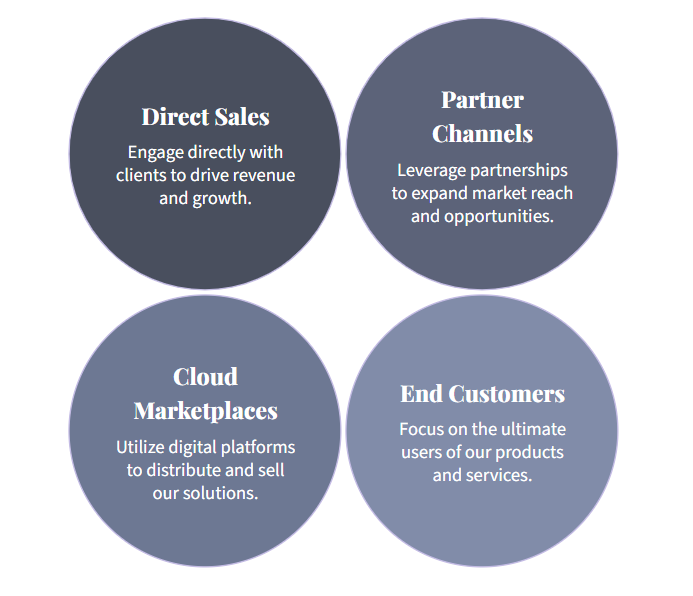
These channels can be broadly categorized as follows:
- Direct Sales Channels: This includes speaking with current and former sales representatives, sales engineers, and customer success managers of the target company to understand sales cycle lengths, deal sizes, quota attainment, and competitive win/loss rates.
- Indirect Partner Channels: This involves querying value-added resellers (VARs), system integrators (SIs), managed service providers (MSPs), and consulting firms (e.g., Accenture, Deloitte). These partners often resell, implement, or recommend software and can provide invaluable insights into market demand, product strengths and weaknesses, and the effectiveness of a company's partner program.
- Digital and Cloud Marketplaces: A rapidly growing channel, this includes platforms like the AWS Marketplace, Microsoft Azure Marketplace, Google Cloud Marketplace, and Salesforce AppExchange. Checks in this area may involve analyzing customer reviews, assessing a product's visibility and ranking, and understanding the co-selling relationship with the cloud provider.
- End-Customers: The ultimate arbiters of a product's value. Speaking with a company's customers helps validate management's claims about product-market fit, customer satisfaction, pricing power, renewal intentions, and propensity for upsell or expansion.
- Competitors: While requiring careful navigation, conversations with a target company's competitors can shed light on competitive dynamics, pricing pressure, and shifts in market share.
At its core, a software channel check is an investigative due diligence exercise aimed at corroborating or challenging the narratives presented by company management, providing an independent assessment of business momentum.
1.3 The Unique Challenges and Opportunities of Software Channel Checks
Conducting channel checks on software companies presents a distinct set of challenges and opportunities compared to other industries. The intangible nature of software means there is no physical inventory to count; instead, analysts must seek proxies for business health like sales pipeline growth, deal velocity, and user engagement. The subscription model introduces the critical concepts of churn and retention, which are often difficult to gauge externally but are powerful indicators of customer satisfaction and long-term viability. A high churn rate can silently erode a company's growth foundation, a fact that may only become apparent in financial reports after significant value has been destroyed.
The complexity of the software ecosystem is another challenge. A single enterprise software sale can involve a direct sales team, a consulting partner for implementation, and a cloud provider for hosting. Triangulating information from these disparate sources requires a sophisticated understanding of how the industry operates. Furthermore, the rapid pace of technological innovation means that competitive moats can be transient. A product that leads the market today can be disrupted by a more agile competitor tomorrow. Channel checks provide a real-time pulse on these competitive shifts, offering an early warning system that is unavailable through traditional research methods.
However, these challenges also create significant opportunities. Because the information is difficult to obtain and synthesize, analysts who successfully execute a rigorous channel check process can gain a substantial informational advantage. Uncovering evidence of accelerating deal closures through VARs, for example, could signal an upcoming revenue beat. Conversely, learning from multiple customers that a recent price increase is causing them to evaluate alternatives could be a powerful thesis for a short position. The goal is to identify these inflection points—positive or negative—before they are widely understood by the market, creating opportunities for alpha generation.
1.4 Whitepaper Objectives and Structure
The primary objective of this whitepaper is to provide a practical, actionable methodology for hedge fund analysts and portfolio managers to conceptualize, plan, and execute effective channel checks within the public software sector. It aims to demystify the process and equip investment professionals with the tools and frameworks needed to integrate this form of primary research into their investment process systematically. This guide moves beyond theoretical discussion to offer concrete steps and real-world considerations for generating a tangible analytical edge.
To achieve this, the whitepaper is structured as follows:
- Section 2: The Theoretical Framework of Channel Checks establishes the foundational concepts, discussing the role of channel checks in overcoming information asymmetry, the legal and ethical considerations under Regulation FD, and how to integrate findings into a broader investment thesis.
- Section 3: A Step-by-Step Methodology for Software Channel Checks provides a detailed, five-phase roadmap for conducting research, from initial scoping and hypothesis formulation to identifying sources, structuring inquiries, and synthesizing data.
- Section 4: Leveraging Technology and Data in Modern Channel Checks explores how to augment traditional human intelligence gathering with due diligence software platforms [1], alternative data sets, and other analytical tools to create a more scalable and robust process [2] [3].
- Section 5: Case Studies and Practical Applications illustrates the application of these methodologies through hypothetical case studies, demonstrating how channel checks can uncover both long and short opportunities, and discusses common pitfalls to avoid.
- Section 6: Conclusion summarizes the key takeaways and reinforces the strategic importance of disciplined channel check diligence for sustained outperformance in software investing.